The Audition Room Doesn't Lie (Except When It Does): Decoding Reality TV's Biggest Casting Wins and Whiffs
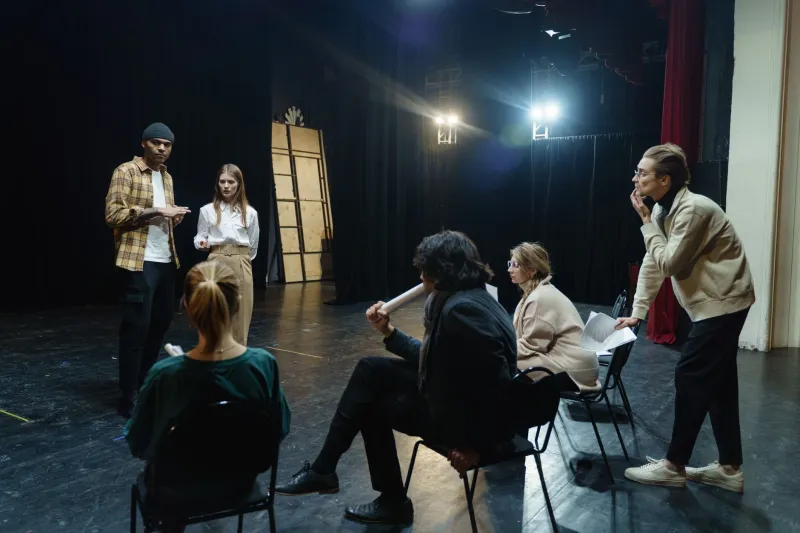
Imagine your job is to look at a person — someone you've met maybe twice, in the most artificial, performance-optimized version of themselves — and decide whether they'll make compelling television for the next three months. Whether they'll fight, cry, scheme, inspire, or completely melt down under the specific, bizarre pressure of living in a house with strangers while cameras watch everything.
That's the casting director's job. And they're working with incomplete information every single time.
We love to armchair-quarterback casting decisions here at Big Boss Buzz, so let's get into it — the science and the chaos of how houseguests get chosen, why some obvious "great TV" picks turn into wallpaper, and how the people nobody saw coming end up running the whole conversation.
What Casting Directors Are Actually Looking For
First, let's give credit where it's due. Reality TV casting isn't random, and it isn't just about finding the most conventionally attractive people in a given city (though, let's be honest, that's part of the formula). The best casting teams are looking for a very specific constellation of traits.
They want expressiveness — people who process emotions externally, out loud, where cameras can catch them. They want conflict tolerance, which sounds like they want fighters, but it's more nuanced than that. They want people who don't shut down when things get uncomfortable. They want specificity — the person who has a genuinely unusual job, background, or worldview that will create friction with the other houseguests in interesting ways.
And above all, they want watchability, which is the most subjective quality imaginable and the one that makes casting both an art and a total crapshoot.
What they often underestimate is adaptability. The houseguest who looks like a one-note character in the audition tape — the loud one, the sweetheart, the schemer — but who can actually shift gears when the game demands it? That person almost always outperforms their casting archetype.
The "Great on Paper" Problem
Every season has at least one. The houseguest who was clearly cast to do big things — who has the backstory, the look, the energy, the confessional charisma — and who then proceeds to be almost entirely irrelevant to everything that matters.
This happens for a few reasons.
Sometimes the archetype gets crowded out. If casting accidentally loads up on a similar personality type, the people who were supposed to stand out end up competing with each other for the same narrative space. You can't have four "strategic masterminds" all trying to run the house. Someone's going to get edited into the background, and it's usually the one who can't adjust their game.
Sometimes the pressure reveals a gap between the audition personality and the real one. Plenty of people are magnetic and confident in a thirty-minute interview. Fewer are magnetic and confident on day forty-seven, after three weeks of bad sleep, a diet of whatever the house budget allows, and the creeping paranoia that everyone is lying to them. The audition room is a controlled environment. The Big Boss house is not.
And sometimes — this is the one nobody wants to say out loud — the casting team just read someone wrong. They saw what they wanted to see, not what was actually there.
The Breakout Nobody Saw Coming
On the flip side, almost every great season has a houseguest who probably got cast as a supporting character and ended up stealing the whole show.
These players tend to share a few traits. They're usually underestimated in the audition — either because they're quieter than the average contestant, or because their strategic intelligence doesn't perform well in short-form interviews, or because they don't fit the conventional template for what a "winner" is supposed to look like.
In the house, though, something clicks. They read social dynamics faster than anyone expected. They make friends with people they were never supposed to connect with. They have a confessional voice that turns out to be genuinely funny or genuinely insightful in ways that make viewers root for them before they've even done anything notable.
The casting team didn't miss these players exactly — they made the house, after all. But they probably slotted them into a secondary role in their mental model of the season, and the actual human being refused to stay there.
Recent Seasons and the Pattern That Keeps Repeating
Looking at recent Big Boss seasons, you can almost predict the casting miscalculations before they happen. The person with the most dramatic backstory who uses it as a shield instead of a weapon. The "villain" cast who never quite commits to the bit and ends up being neither entertaining nor strategic. The "superfan" who knows every historical precedent but can't translate that knowledge into actual gameplay because they're too busy being starstruck by the experience.
And then there's the person who showed up with no particular narrative hook, who the promos barely featured in the first week — and who's suddenly the most-talked-about player in the house by episode six.
Producers are getting better at identifying this pattern, which is why you're seeing more casting calls that specifically emphasize gameplay intelligence over surface-level personality. But the fundamental challenge remains: you cannot fully simulate what a person will do in the Big Boss house until they're actually in it.
The Casting Sweet Spot
The best casts — the seasons people rewatch, the ones that generate the most fan discussion — usually hit a specific balance. You need a few people who perform exactly as advertised, because predictability creates narrative structure. You need a couple of wildcards who break the expected pattern, because unpredictability creates drama. And you need at least one person who grows into a completely different player than they were in week one, because transformation is the thing audiences emotionally invest in most.
When casting gets all three in the same house? That's a season for the ages.
When they load up too heavily on one type — all wildcards, all archetypes, all strategists with no social game — the season can feel either chaotic or flat, depending on which direction they overcorrected.
Casting is, at its core, an optimistic act. You're betting on people. You're predicting potential. And in a competition designed to reveal who people really are under pressure, that bet pays off in ways nobody planned for — good and bad — every single time.